How Many Castles Are There in Pembrokeshire?
There are over 50 castles in Pembrokeshire, depending on how strictly you define the word “castle”. Some are mighty stone fortresses. Some are romantic ruins. Some are little more than a suggestion of walls and a very good imagination. But taken together, they make Pembrokeshire one of the most castle-rich counties anywhere in Britain.
At some point, while driving through West Wales, you’ll glance up from the road, spot a ruin on a hill, and think, “Another one?”
And yes, it probably is.
When you think about the above, it explains a lot.
Why Pembrokeshire Has So Many Castles
Pembrokeshire has always been important. Strategically, politically, and occasionally temperamentally.
Sitting on the western edge of Wales, with a long, indented coastline and fertile land inland, it became a focal point during the Norman period. Castles weren’t built here for decoration, they were built to control land, people, trade routes, and occasionally each other.
The result? A landscape dotted with fortifications at regular intervals, often within sight of one another. You’re never very far from a castle in Pembrokeshire, even when you think you are.
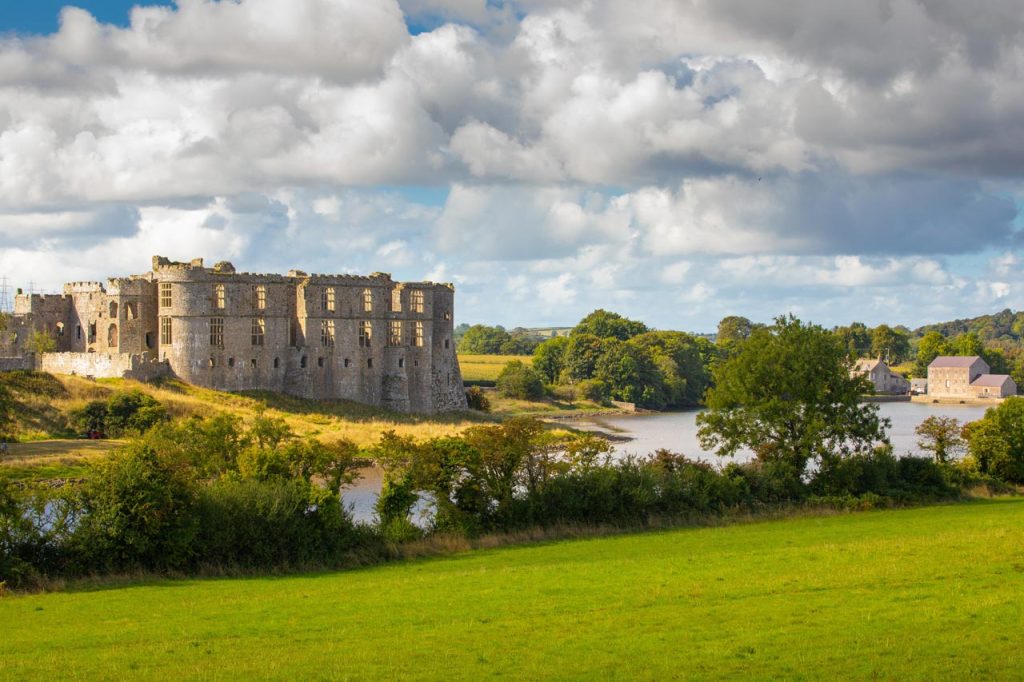
Not All Castles Are the Same (Thankfully)
When we talk about castles in Pembrokeshire, we’re not talking about one uniform type.
You’ll find:
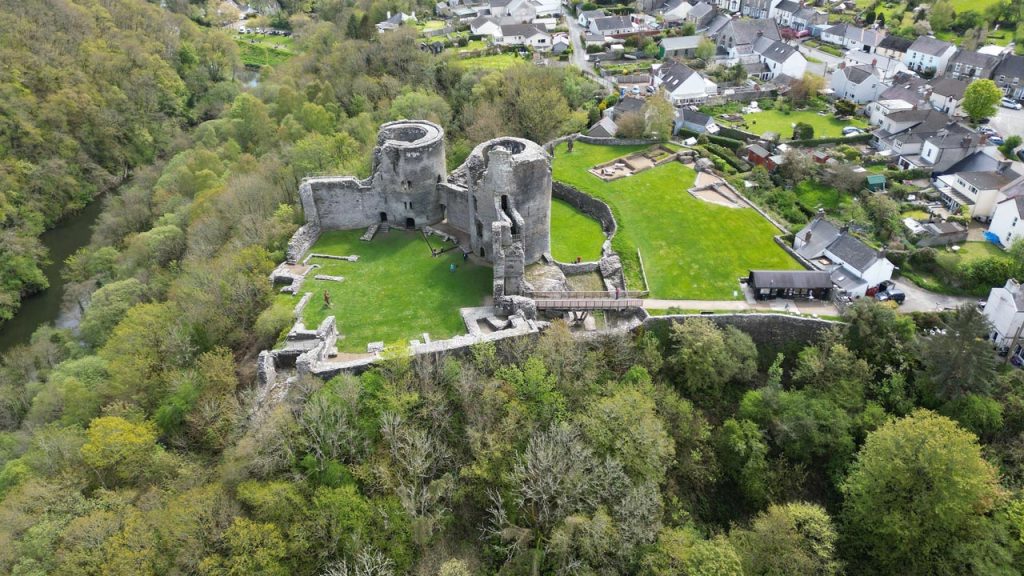
- Grand stone castles with towers, gates, and proper gravitas
- Coastal strongholds guarding harbours and sea routes
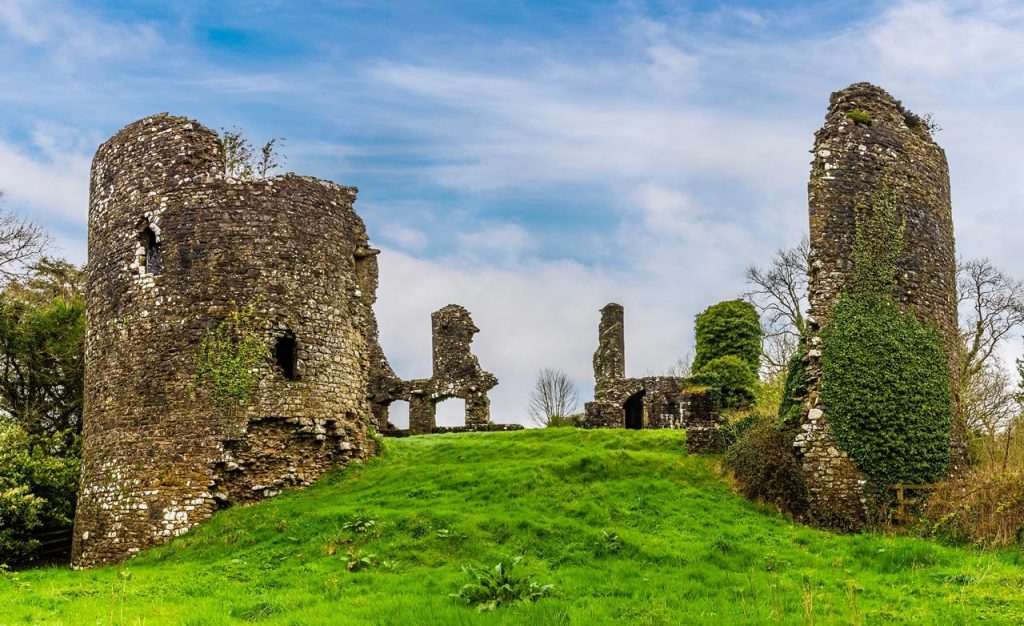
- Smaller motte-and-bailey castles, now softened by grass and time
- Later defensive buildings that blur the line between castle and fort
Some were military powerhouses. Others were administrative centres. A few look like they were built largely to make a point.
And many have stories involving sieges, rebellions, shifting loyalties, and people making very firm decisions with limited information.
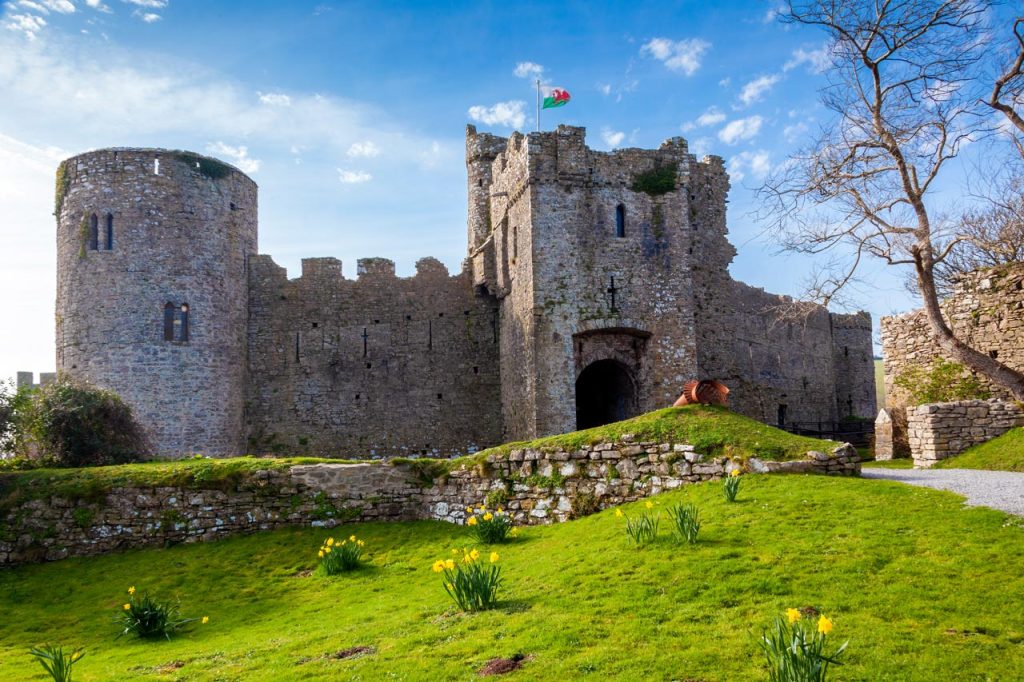
Famous Castles, and the Lesser-Known Ones Too
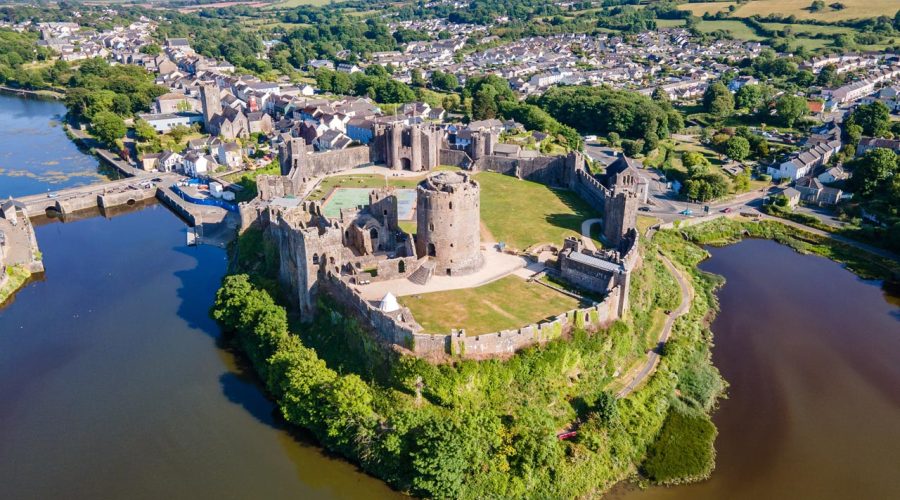
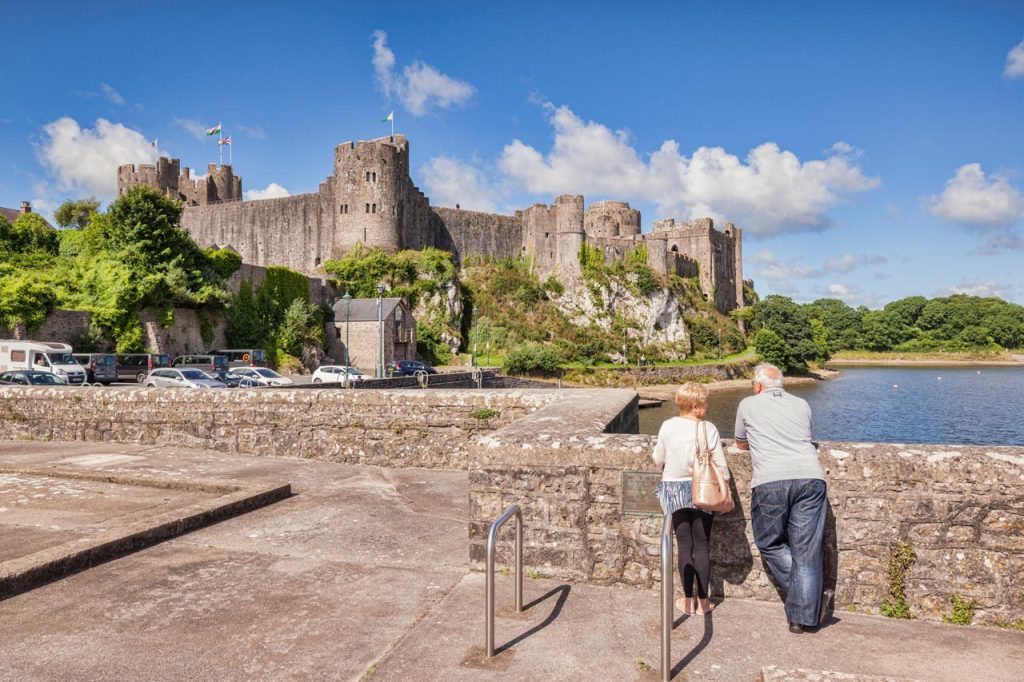
Pembrokeshire has some headline castles that most people recognise, like Pembroke Castle, Carew Castle, a Manorbier Castle, dramatic, well-preserved, and rightly celebrated.
But part of the joy of exploring castles lies in the quieter ones. The ruins tucked behind farm gates. The remains perched above estuaries. The places you stumble upon rather than plan to visit.
These are the castles that make you stop, look, and quietly say, “Well then.”
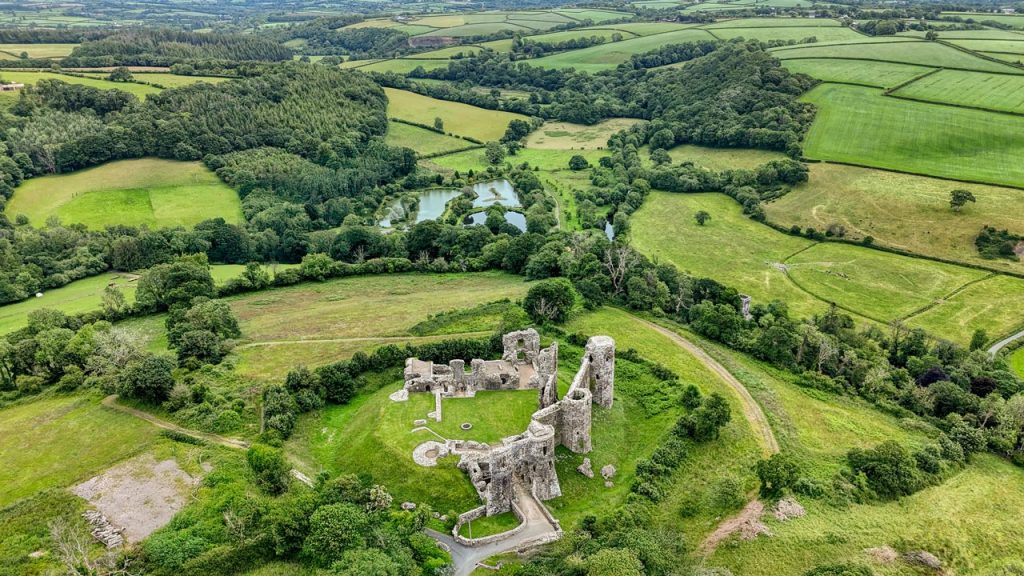
A Castle for Every Mood
One of the reasons castles across Pembrokeshire feel so special is how they fit into the landscape.
Some loom.
Some blend in.
Some sit proudly on headlands, clearly enjoying the view.
Others seem to have accepted their fate and are slowly returning to nature.
You can visit a castle in the morning, walk a beach in the afternoon, and pass two more ruins on the way home without really trying. In Pembrokeshire, castles aren’t attractions, they’re part of the scenery.
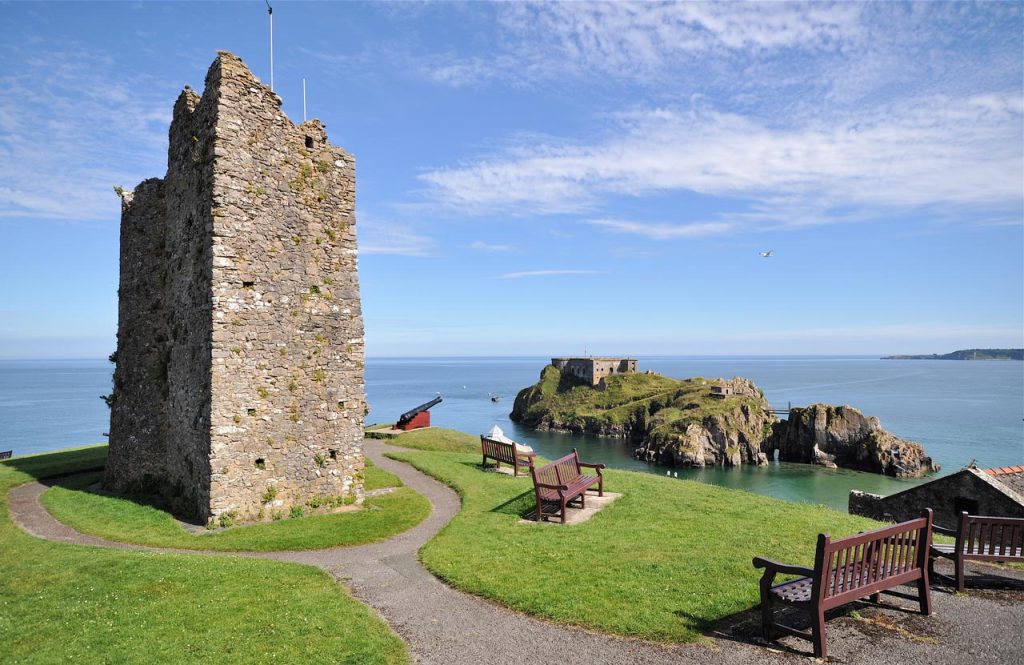
Why Castles Still Matter Here
These castles aren’t just historical leftovers. They help tell the story of Pembrokeshire, a place shaped by borders, ambition, resilience, and the odd power struggle.
They remind us that:
- This landscape has always mattered
- People have always wanted to defend it
- And history here is layered, not linear
They also give Pembrokeshire a sense of continuity. Long before car parks and cafés, these places were centres of life, authority, and decision-making.
Some decisions worked out better than others.
Visiting Castles in Pembrokeshire Today
Whether you’re visiting or living locally, exploring castles is one of the simplest pleasures the county offers.
Many are free to access.
Many are open year-round.
And many reward nothing more than curiosity and a decent pair of shoes.
You don’t need a plan. You just need to look up occasionally.
FAQs About Castles in Pembrokeshire
There are over 50 castles in Pembrokeshire, depending on how ruins, earthworks, and later fortifications are counted. These range from large stone castles to smaller defensive sites, making the county one of the most castle-rich areas in the UK.
Pembrokeshire has many castles because of its strategic importance during the Norman period. Castles were built to control land, trade routes, and coastal access, which is why many castles across Pembrokeshire are located near rivers, harbours, and key transport routes.
Pembroke Castle is the most famous castle in Pembrokeshire. It is one of the largest and best-preserved castles in Wales and is historically significant as the birthplace of Henry VII.
Many castles in Pembrokeshire are free to visit, particularly ruins and open-access sites. Larger castles managed by heritage organisations may charge an entry fee, but public access to castle sites is widely available across the county.
Yes, most castles in Pembrokeshire can be visited all year round. Outdoor ruins are accessible throughout the seasons, while opening times for larger castles may vary depending on the time of year.
A Final Thought
Over 50 castles. In one county. That’s not an accident.
The sheer number of castles in Pembrokeshire speaks to a place that has always mattered, strategically, culturally, and historically. And while the battles are long over, the stories remain, written into stone, landscape, and memory.
So next time you see a ruin on a hill and think, “Another one?”
Smile.
In Pembrokeshire, that’s exactly the point.